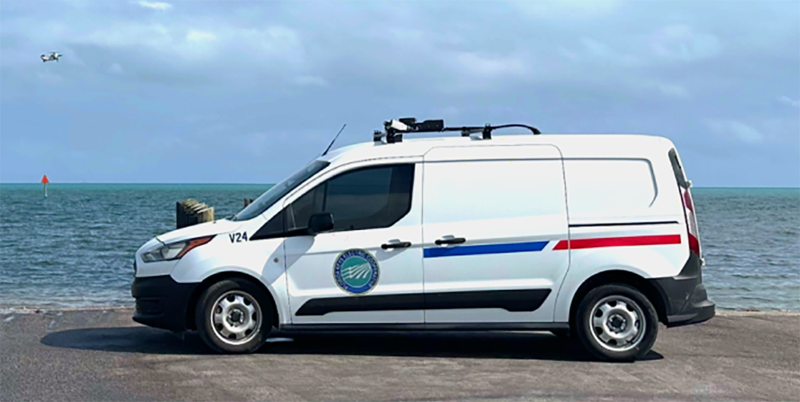

Florida Keys Electric Cooperative (FKEC) is testing a practical way to use artificial intelligence (AI) by pairing vehicle-mounted cameras with analytics to identify equipment concerns during routine travel. The approach has already helped staff uncover more than 100 transformer hardware issues that had gone unnoticed, illustrating how better field data can strengthen proactive asset management without creating a separate inspection program.
FKEC, which serves 33,000 meters across the Upper and Middle Florida Keys, deployed cameras and analytics from Noteworthy AI on vehicles already traveling its system. The cameras collect high-resolution, geolocated images of poles and equipment during normal operations, building a current visual record with little additional effort.
"We wanted to see what we could naturally capture without creating a whole new inspection process," said Nick Lyons, director of power supply and transmission. "The advantage is that every image is tied to our asset data, giving us current photographs of our system with very little additional effort."
As vehicles move through the service territory, the cameras identify poles and capture detailed images that are uploaded and analyzed within minutes. The platform can link images to FKEC's geographic information system (GIS) records, update its asset inventory and search for vegetation growth, equipment abnormalities and other conditions that may require attention.
FKEC views the technology as a tool to support skilled employees, not replace them. AI can flag potential concerns, but staff expertise remains essential to interpret images, recognize patterns and decide what needs action.
"It's not a silver bullet," Lyons said. "It has some serious advantages, but it's still got a ways to go before it replaces human eyes looking at the sky."
I was very leery during the demonstration. When we came back and looked at a specific pole, the level of detail was unbelievable. We had driven past it at 45 miles per hour, and the image quality was still remarkable.

The clearest value so far has come from the images themselves. While reviewing photographs, Lyons noticed loose transformer mounting hardware. Further review identified dozens of transformers with similar concerns and ultimately revealed more than 100 instances across the system. The recurring condition had previously gone unnoticed.
"It's hard to measure something preventative," Lyons said. "But we've identified issues that clearly reduced our exposure to future problems. Without these images, many of those conditions likely would not have been noticed."
The image quality also overcame early skepticism. Peter Amendola, FKEC's director of engineering, questioned whether cameras could capture useful details from a vehicle traveling at normal road speeds.
"I was very leery during the demonstration," Amendola said. "When we came back and looked at a specific pole, the level of detail was unbelievable. We had driven past it at 45 miles per hour, and the image quality was still remarkable."
FKEC is also exploring longer-term uses in storm response and engineering analysis. Rapid image collection could document post-storm system conditions. Future light detection and ranging, or LiDAR, capabilities could help evaluate conductor clearances and identify compliance concerns on the same platform.
The cooperative also sees value in helping shape the technology. Staff share findings with the vendor to improve AI models and refine future capabilities.
"We're always looking for ways to spend our time more effectively," Lyons said. "If technology can help us spend less time searching for problems and more time correcting them, that's a substantial improvement."
FKEC's experience offers cooperative leaders a practical lesson: AI does not need to automate an entire inspection process to deliver value. A focused deployment can improve the information available to employees, reveal recurring conditions and help a cooperative move from reactive discovery toward proactive asset management.