Rising electricity demand is straining U.S. power grids and testing the pace at which infrastructure can expand. Meeting that demand reliably will require substantial additions to generation and significant investment. Transmission interconnection, however, remains a major constraint that could slow the addition of new supply.
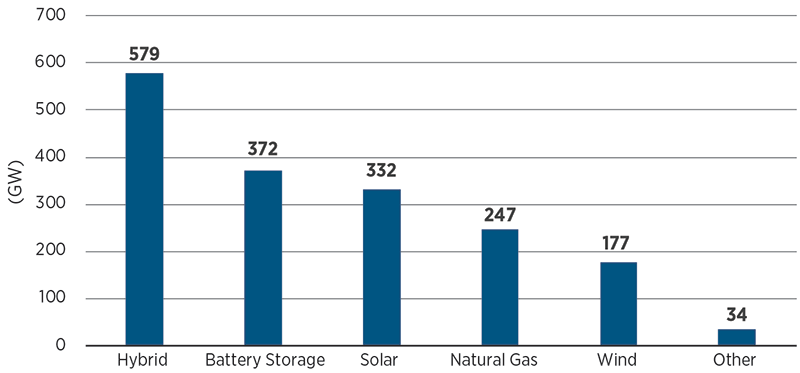
Federal Energy Regulatory Commission reforms are intended to improve interconnection efficiency and limit speculative projects, but queues remain elevated. According to S&P Global Market Intelligence, generation projects in interconnection queues totaled 1,740 GW as of June 2026 across seven independent system operator regions and the non-ISO regions of the West and Southeast.
Interconnection Queue Capacity
Source: S&P Global Market Intelligence.
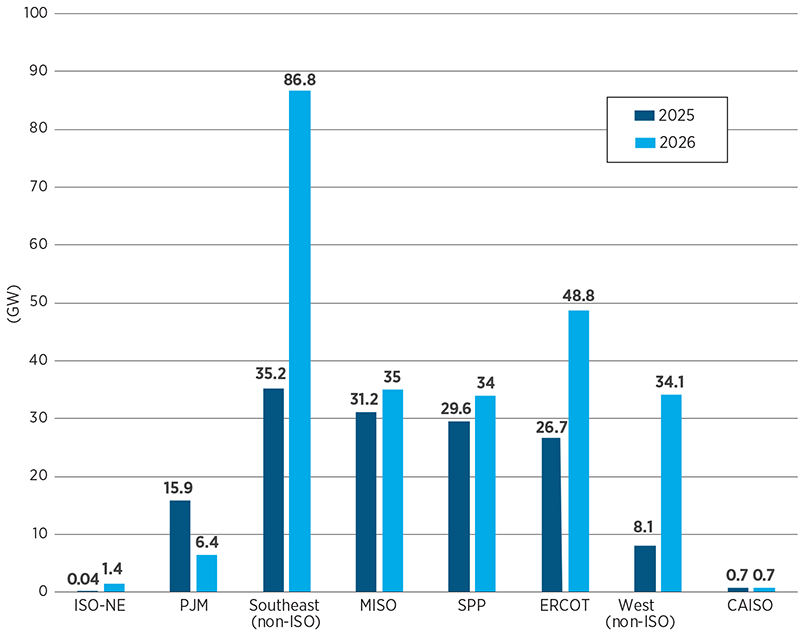
Renewable resources still account for most of the backlog, although their share fell seven percentage points over the past year to about 83% of queued capacity. Solar posted the largest annual decline, falling 22% to 332 GW. The shift coincides with the phaseout of renewable energy tax credits and direct-pay provisions under the Inflation Reduction Act. At the same time, interest in new natural gas generation is growing as data center demand expands. According to Enverus, gas-fired generation also has the shortest queue duration at an average of 3.4 years. Natural gas projects in queues increased nearly 68% over the past year to 247 GW. At least six of nine U.S. regions recorded increases in queued natural gas capacity. The non-ISO Southeast had the most at 87 GW, more than double the prior-year total. Natural gas now represents 46% of queued capacity in that region.
US Natural Gas Capacity in Interconnection Queue
Source: S&P Global Market Intelligence.
Grid operators and utilities continue to pursue interconnection reforms, but queue timelines remain long in many regions.
Average Time from Queue Date to Proposed Online Date (Months)
Source: S&P Global Market Intelligence.
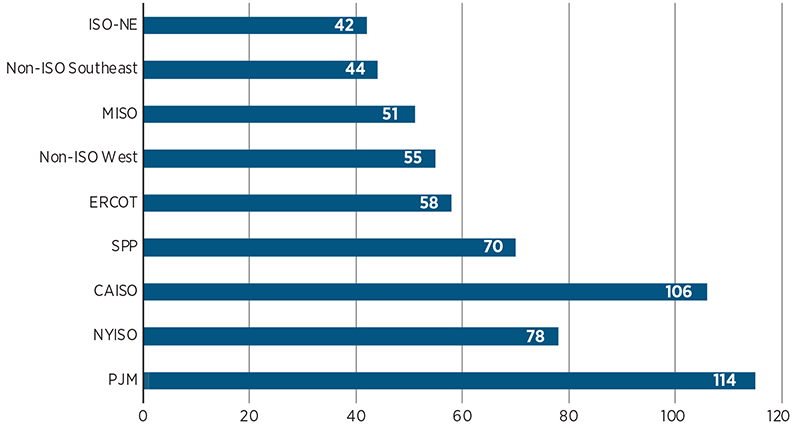
PJM has the longest interconnection lag, averaging nearly 10 years across all project types, almost twice the prior-year average. The region faces a large volume of interconnection requests from generators and large loads, primarily data centers. The scale of proposed transmission changes has created a historically large bottleneck in the nation’s largest power market.
PJM is an extreme case, but long interconnection lead times constrain new supply across all U.S. regions. Even ISO New England, which has the shortest average timeline, takes 3.5 years to move projects through interconnection queues and into operation. The non-ISO Southeast was the only region to improve, cutting its average wait 24% over the past year, from 58 months to 44 months.
New supply is not reaching the grid fast enough to match rapid demand growth. For cooperative leaders, the central issue is how quickly generation and transmission can be expanded while maintaining reliability. Relieving pressure on consumers will require faster interconnection processes, transmission expansion and broader grid reform.