Editor's note: The CFC Grid Price Index (GPI) is an index, not a product or a tool. It is a benchmark number that tracks changes in wholesale prices over time across a fixed basket of electric cooperative distribution equipment. Some of the supplier partners quoted in this article call the GPI a "tool." That's because cooperative leaders can use the benchmark to explain rising equipment costs to their boards and members. The GPI itself is an index number, measured against a 2019 baseline, with category-level subindices.
Electric cooperative leaders have spent the past several years navigating supply chain disruptions, material shortages and inflationary pressures that have dramatically increased the cost of building and maintaining the electric grid. A new industry benchmark developed by CFC and the nation’s electric supply cooperatives aims to help cooperative leaders better understand those cost changes and communicate their impact to directors and members.
The CFC Grid Price Index (GPI) tracks changes in the cost of electric distribution equipment using actual supplier wholesale purchase data from cooperative supply organizations nationwide. Built around a fixed basket of equipment and a 2019 pre-COVID baseline, the index measures inflation across key distribution categories, including transformers, conductors, switchgear and utility hardware.
GPI Quarterly Inflation (Year-Over-Year)
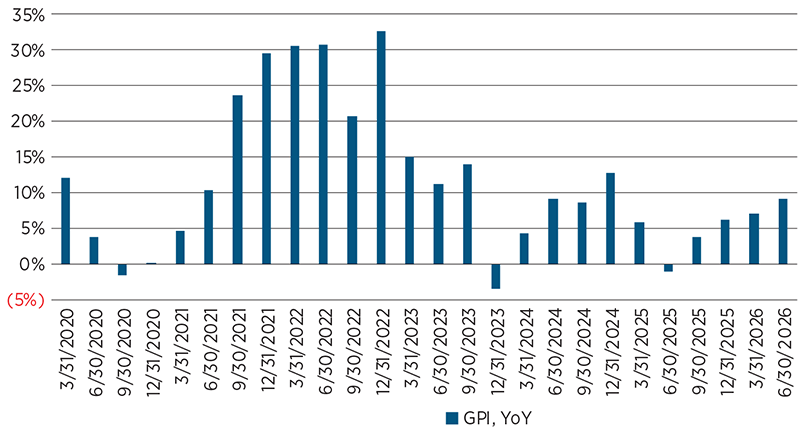
SOURCE: CFC Grid Price Index.
As of the second quarter of 2026, the GPI shows electric distribution equipment costs have increased about 100% since 2019, while the year-over-year inflation rate reached 9.1%, up from 7.1% in the first quarter.
More Than a Pricing Benchmark
Our goal was to provide more than a pricing benchmark for electric cooperatives.

“Our goal was to provide more than a pricing benchmark for electric cooperatives,” CFC CEO Andrew Don said. “The GPI provides leaders with a trusted, independent benchmark for tracking changes in utility material costs to help executives and boards make more informed financial decisions and communicate those changes to members.”
The index gives directors and management teams a common reference point for evaluating work plans, capital budgets, borrowing needs and long-term infrastructure investments. Because it is based on actual wholesale transaction data, while protecting supplier confidentiality, the GPI provides an industry-specific view of inflation that broad economic indices cannot match.
Turning Experience into Insight
The idea for the index grew out of challenges experienced across the cooperative network during and after the COVID-era supply chain disruptions. Extended lead times, material shortages and rapidly rising costs made budgeting and long-term planning increasingly difficult for supply cooperatives and their member systems.
RESCO President and CEO Matt Brandrup became involved early in the effort because cooperative leaders needed a better way to understand and explain those changing cost dynamics.
The new inflation index will provide members with a reliable and objective tool to better understand the impact of inflation on their operations, budgets and capital planning efforts.

“The new inflation index will provide members with a reliable and objective tool to better understand the impact of inflation on their operations, budgets and capital planning efforts,” Brandrup said.
The index creates a data-driven framework that can support planning, budgeting and borrowing decisions while providing greater transparency in discussions with boards and members.
Gresco Utility Supply Senior Vice President Joey Arroyo said the concept resonated immediately because of its practical value.
It will help with cost planning, future work plan analysis, annual budget reviews and provide insight into future borrowing needs if cost structures remain on the same path.

“This index should be a valuable tool for electric cooperatives going forward,” Arroyo said. “It will help with cost planning, future work plan analysis, annual budget reviews and provide insight into future borrowing needs if cost structures remain on the same path.”
The index gives cooperative leaders greater visibility into emerging cost trends and supports more informed capital planning decisions.
A Benchmark for Executives and Directors, Not Just Economists
While the index provides valuable market intelligence, supply cooperative leaders consistently emphasized its importance as a governance and communications resource.
The GPI tracks the prices supply cooperatives pay manufacturers and compares those costs against 2019 levels using current purchasing patterns. The methodology isolates changes in material costs and provides both an overall index and category-level subindices.
For directors, that means access to an objective benchmark grounded in real-world utility purchasing data.
AECI Utility Solutions Chief Commercial Officer Jason Allen said that may be one of the index’s most important contributions because it helps educate stakeholders across the cooperative community.
The index helps quantify material cost increases and provides context for discussions about capital spending, maintenance budgets and electric rates.

Allen said the index helps quantify material cost increases and provides context for discussions about capital spending, maintenance budgets and electric rates.
CEEUS President and CEO Chad Capps said directors often need independent validation when evaluating higher project costs and infrastructure investments.
This would allow electric cooperatives to show their boards justifiable, third-party reasoning for why their material costs had increased.

“This would allow electric cooperatives to show their boards justifiable, third-party reasoning for why their material costs had increased,” Capps said.
Capps added that the index can help leaders determine whether cost increases reflect broader market conditions or require further scrutiny.
What the Data Show
The findings underscore the scale of inflationary pressures experienced across the utility supply chain. Overall, the GPI indicates electric distribution equipment costs have more than doubled since 2019.
Category-level findings show significant differences across equipment types:
- Underground cable accessories: approximately 143% increase since 2019.
- Utility hardware: approximately 135% increase.
- Enclosures, pedestals and pads: approximately 114% increase.
- Overhead conductors: roughly 105% increase.
- Transformers: nearly 96% increase.
- Underground conductors: roughly 95% increase.
- Switching and protection equipment: nearly 90% increase.
These benchmarks can help boards better understand how inflation is affecting specific portions of a cooperative’s work plan and capital portfolio.
Strengthening Cooperative Decision-Making
The cooperative supply leaders who helped develop the index share a common belief that better information leads to better decisions.
They emphasized the growing need for objective, credible data when discussing project costs, capital investments and financial strategies with directors and member-owners; the value of anticipating future borrowing needs and cost pressures; the importance of educating stakeholders and providing inflationary context; and the confidence that comes from having a trusted benchmark when evaluating supplier pricing and future budgets.
For Don, the GPI represents another example of the cooperative network working together to solve a shared challenge.
“At CFC, we believe sound governance begins with sound information,” Don said. “The Grid Price Index gives cooperative leaders and directors a strong foundation for planning, communicating and making decisions in an era of continuing change.”
As cooperatives continue investing in reliability, resilience and growth, the GPI is designed to give CEOs, CFOs, directors and member-owners a clearer understanding of how inflation is affecting electric system costs and the decisions needed to sustain those investments.