energy-tech
May 21, 2019
EPRI: Electromagnetic Pulse Could Cripple, But Not Destroy, U.S. Electric Grid
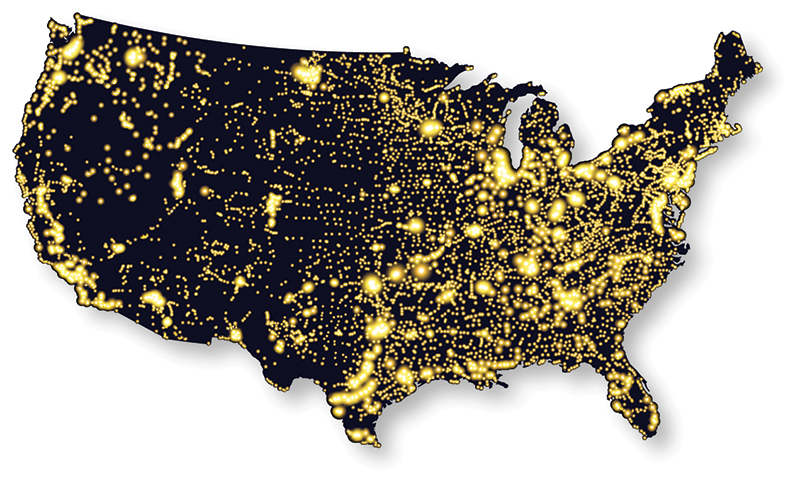
An atmospheric nuclear blast over North America would cause fast-moving power blackouts across several states, according to attack simulations carried out by the Electric Power Research Institute (EPRI), a nonprofit research consortium made up of electric utilities, including electric cooperatives, headquartered in Palo Alto, California.
Shock waves from an electromagnetic pulse (EMP) detonation could also disable or destroy grid control devices, potentially disrupting and delaying power restoration.
It’s important that we identify and test ways to limit damage from these pulses.
EPRI has described its ongoing study as the most systematic investigation of a single EMP attack, a threat that has grown to crisis proportions because of North Korea’s missile and nuclear weapons testing. The country has boasted its latest warhead can generate “super-powerful EMP against a vast region.”
Ground Currents Penetrated Transformers, Leading to Mass Blackouts
EPRI’s research results from a simulated explosion of a 1.4-kiloton nuclear weapon roughly 250 miles above Earth over 11 undisclosed locations in the continental United States. Using computer models of the grid, researchers assessed impacts on high-voltage transformers that move power across the Eastern, Western and Texas interconnections.
In five cases, ground currents triggered by the EMP explosion, called E3 pulses—similar to those caused by a solar flare—penetrated transformers and caused a collapse of system voltages that happened too quickly for operators to respond, resulting in regional, multistate blackouts. In two tests, smaller, localized outages occurred, and the grid in the remaining six was still operating after the simulated 112-second event even though many power plants were down.
Effects from the E1 shock wave, the initial and most powerful of three EMP pulses, and E2, resembling a lightning strike, are still being investigated, EPRI said. More detail on these and the costs of protection strategies must be gathered before policy strategies are set.
“This report is another step in providing the technical basis needed before strategies to mitigate a HEMP [high-altitude EMP blast] can be developed,” said EPRI President Michael Howard.
Damage Was Widespread But Not Total
The EPRI analysis and an earlier one this year indicate that an EMP attack would not cause a total nationwide blackout. “Although the results should help allay our worst fears, we still have a lot to learn,” added Rob Manning, EPRI vice president of transmission and distribution. “It’s important that we identify and test ways to limit damage from these pulses.”
EPRI noted that widespread power disruptions occurred in all 11 scenarios, but some areas were protected by control devices that quickly shut down generation or disconnected customers, preventing a larger voltage collapse. Other automatic controls also limited damage.
EMP Hardening Is a Necessity
But that protection worked only if critical controls had been hardened against E1 and E2 pulses. Some U.S. utilities have begun or completed EMP hardening, but there are no regulations that require it.
New research published by the Electric Infrastructure Security Council, a nonprofit research firm, demonstrated E1 vulnerability in power grid relays. Manning pointed out EPRI is investigating the threat to relays and hopes to recommend protective schemes before the end of 2018.
During the most recent large-scale solar storm in 1989, which hit Quebec Province hard, the voltage collapse occurred so quickly that transformer destruction did not occur.