
Power purchase agreements (PPAs) have long helped electric cooperatives add renewable energy resources without developing generation assets themselves. But in recent years, the cost of procuring solar and wind generation through PPAs has increased significantly, with price growth far outpacing inflation in the U.S.
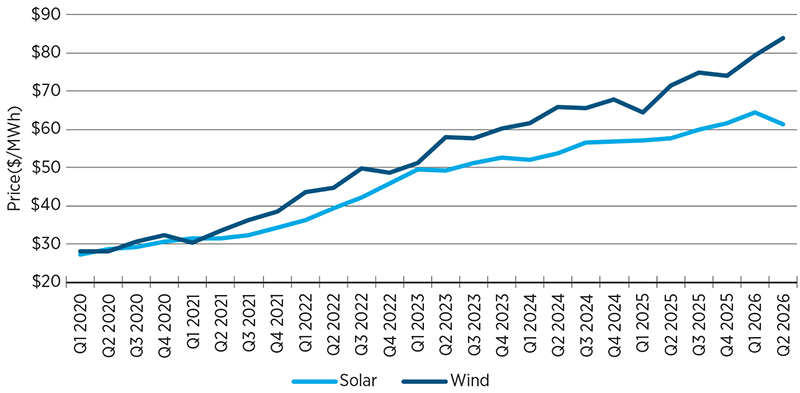
Renewable PPA Prices—Market Averaged National Index
Source: LevelTen Energy.
Solar Market
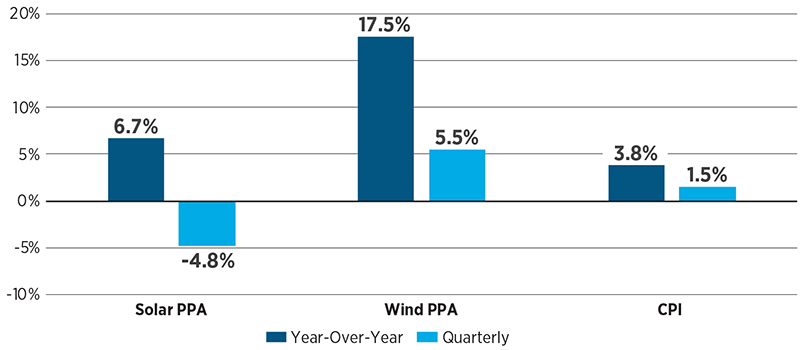
Solar PPA prices provided some welcome relief in the second quarter of 2026. According to LevelTen Energy’s national average PPA price index, solar PPAs averaged $61.40/MWh, down 4.8% from the previous quarter. Even with that decline, solar PPA prices remain 6.7% higher than a year ago and nearly 95% above levels seen five years ago.
The recent decline reflects softer demand, driven by relatively less competitive pricing and ongoing revisions to the Greenhouse Gas Protocol (GHGP). The protocol was originally designed to set standards for communities to help reach their climate goals. While many data centers continue procuring renewable energy at scale, uncertainty surrounding the GHGP revisions has made other commercial and industrial buyers more cautious.
Wind Market
Wind PPA prices continue to rise and have not experienced the same short-term relief as solar. Prices increased 5.5% in the second quarter to an average of $83.79/MWh. That record high represents a 17.5% increase year over year and a more than 150% increase over the past five years.
A federal permitting bottleneck has effectively stalled new wind development for nearly a year. As a result, the market remains tight, allowing sellers with available generation to command premium prices.
Price Changes, as of Q2 2026
Source: LevelTen Energy.
Market Outlook
Demand for renewable energy PPAs remains strong, but supply-side constraints continue to limit the availability of new wind and solar projects, keeping upward pressure on prices. Interconnection remains one of the industry’s most significant bottlenecks. Between 2000 and 2020, only 13% of generation capacity seeking interconnection ultimately became operational. For projects completed in 2025, the median time spent in the interconnection queue reached five years. The pace of new generation additions remains too slow to ease renewable PPA market pressures, and additional risks continue to emerge.
The second quarter also marked an important transition for renewable energy developers seeking to qualify for federal tax credits or direct-pay subsidies. As the market moves through the second half of the year, the pipeline of projects eligible for those subsidies will narrow significantly, with only limited exceptions. These incentives have played an important role in improving renewable energy economics. Absent an unexpected policy change, the renewable PPA market is entering a period of heightened uncertainty that could push prices even higher.