economy
April 20, 2026
Rethink What US Economic Resilience Really Means
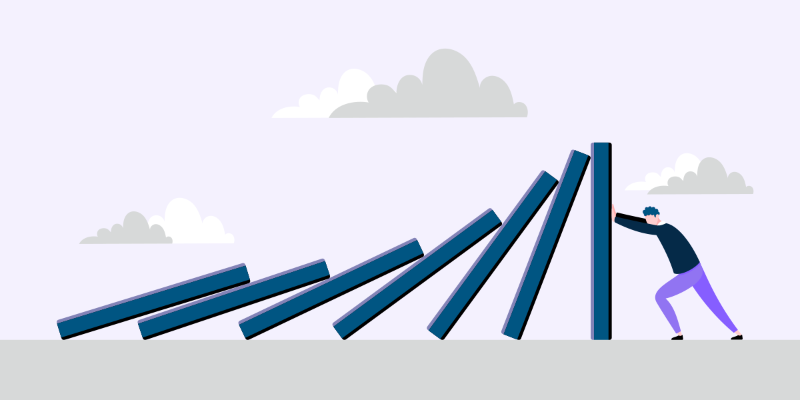
In article after article about rising prices, slowing growth or mounting debt, one phrase reliably appears: The U.S. economy is resilient. It has become a kind of reflex—an acknowledgment of problems paired with reassurance that, somehow, the system keeps working. That reassurance is not wrong, but it is incomplete.
A better way to understand the American economy is as a massive, solidly built ship. It was constructed with extraordinary advantages. The U.S. dollar and Treasury market anchor the global financial system, ensuring steady demand for its debt. Its private sector remains among the most dynamic in the world, constantly adapting, innovating and reallocating capital. The country is rich in natural resources and has moved closer to energy independence than most major economies. Its sheer size—and a consumption-driven model—further insulate it from external shocks, reducing reliance on exports compared to many peers. All of this makes the ship remarkably stable. It can withstand storms that would capsize smaller vessels.
But stability is not the same as invulnerability. Beneath the surface, small holes have formed. The cost of living continues to strain households, even as headline indicators remain strong. Economic growth is uneven, leaving parts of the country and segments of the population behind. Federal debt levels are on an unsustainable trajectory, limiting future policy flexibility. Structural challenges in housing, healthcare and labor markets persist with no easy fixes. Individually, these issues may seem manageable. Collectively, they represent a slow accumulation of pressure.
So long as the ship stays afloat, these problems feel less urgent. Policymakers and commentators point to resilience as reassurance. But too often, that reassurance becomes a substitute for action. Resilience should buy time to make difficult, necessary repairs. Instead, it can enable delay. And delay, over time, becomes complacency. A large ship does not sink the moment water begins to seep in. It sinks when leaks are tolerated for too long and the margin for error disappears.
The U.S. economy is not in immediate danger. But resilience is not a permanent shield. It delays consequences; it does not eliminate them. Without accountability and action, it becomes something else entirely—an excuse. And eventually, the consequences it once postponed could arrive all at once.
Federal Debt as % of GDP
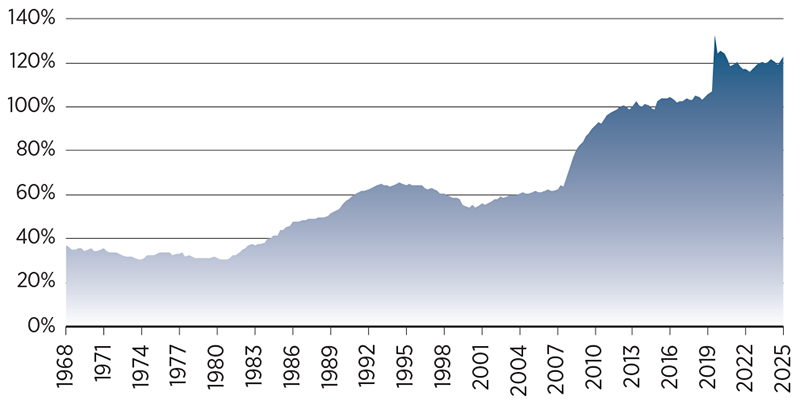
Source: Federal Reserve Bank of St. Louis.