- Main
-
In 2023 and 2024, eggs became the defining symbol of inflation in America. Shoppers stared in disbelief at grocery store shelves as the price of a basic carton doubled or even tripled. Politicians talked about eggs. Cable news talked about eggs. Social media turned eggs into shorthand for an economy that suddenly felt unaffordable. The causes were relatively straightforward: avian flu devastated poultry flocks, supply chains were strained and food costs surged after the pandemic. Eggs represented a moment of chaotic goods inflation. But by 2025, America’s inflation symbol had changed. The new emblem of economic anxiety was no longer sitting in the refrigerator. It was arriving every month in the mailbox: the electricity bill.
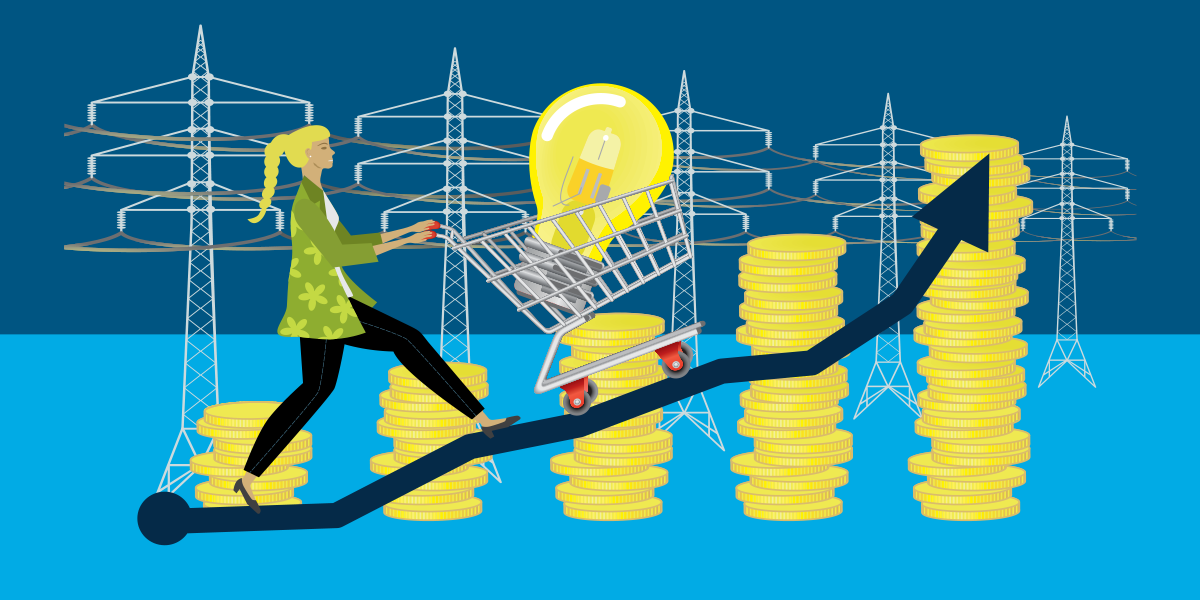
Unlike eggs, electricity is not a temporary supply shock. Rising utility bills reflect something deeper and more structural happening in the U.S. economy. Across the country, households have seen power costs climb at rates not experienced in decades. Increasingly, consumers blame aging infrastructure, massive grid upgrades, rising natural gas costs, climate resilience spending and, most prominently, the explosive growth of data centers.
Electricity has moved from a mundane expense to a central political issue. People are openly asking why their monthly bills are rising while trillion-dollar technology companies are racing to build more energy-hungry artificial intelligence (AI) infrastructure. Data centers now consume enormous amounts of electricity, with some individual facilities requiring as much power as entire cities.
The politics are becoming combustible because electricity is different from other forms of inflation. Families can delay vacations or dine out less often, but they cannot opt out of air conditioning during a Virginia summer or heating during a Midwest winter. Utility bills feel less like discretionary spending and more like the price of basic existence.
To be fair, data centers are not the sole cause of rising electricity prices. Some researchers argue the larger drivers are grid modernization, wildfire mitigation, storm hardening and decades of underinvestment in transmission infrastructure. Still, the AI boom has become the visible face of the problem.
The recent Iran war temporarily shifted public attention toward gasoline prices and oil markets. Yet that geopolitical shock will fade. The deeper, structural pressure on electricity prices will remain. And unlike eggs, electricity bills will likely remain center stage in America’s inflation discourse.
economy
May 18, 2026
Electricity Bills Are America’s New Inflation Symbol
Average Residential Electricity Price
(Cents per kWH)
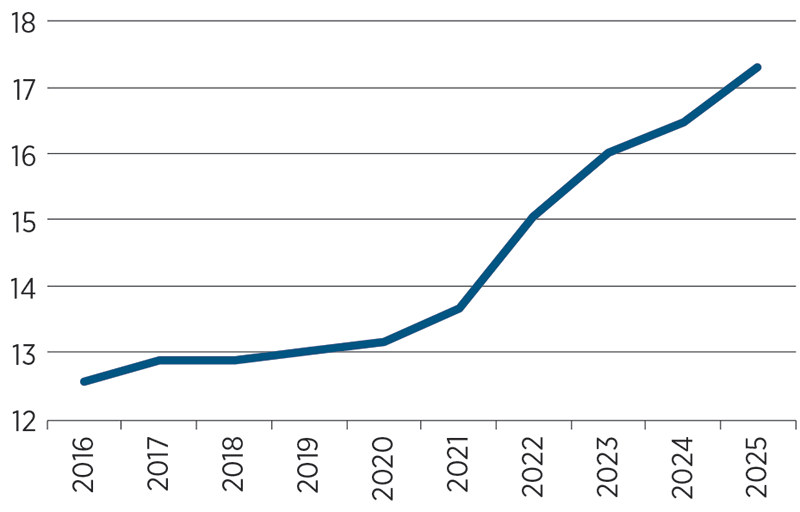
SOURCE: U.S. Energy Information Administration.