- Main
-
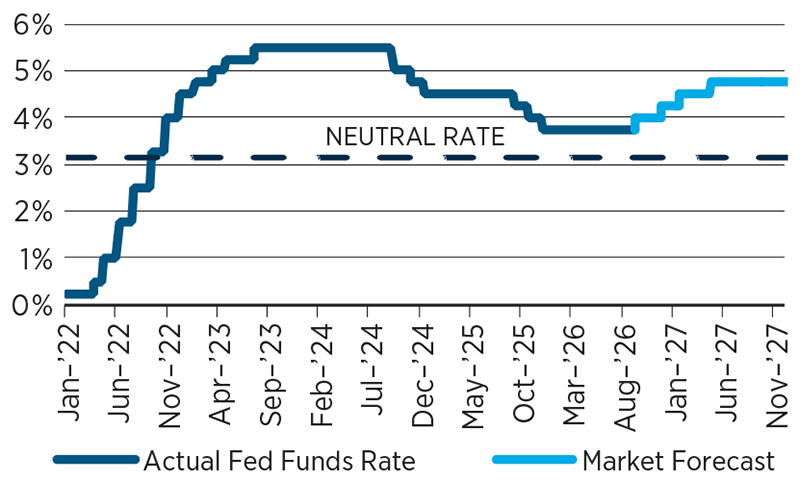
The Federal Reserve’s decision to raise its policy rate by 25 basis points was its first increase in three years. When Fed Chairman Kevin Warsh said the move had “removed a dose of accommodation,” markets interpreted his language as a signal that additional hikes could follow. With the 10-year Treasury yield touching 5%, it may be tempting to curse our luck for getting a Fed leadership team that appears more hawkish than its predecessor. But higher long-term rates are written in the stars regardless of who leads the Fed.
If we were to read the interest-rate horoscope, three signs would dominate the chart. First, Mars, the planet of conflict, has been unusually active. Wars, sanctions and security crises are disrupting supply chains and lifting energy and commodity prices. The result is inflation that central banks cannot directly repair but may still try to contain with higher policy rates. Bond investors are responding by demanding higher yields to protect themselves against inflation and the loss of purchasing power. Mars casts another shadow over the bond market: defense spending. As governments reassess their military readiness, they borrow more on top of the already-high deficits, leading to higher government bond yields.
Next comes Mercury, the ruler of commerce. Trade policy has turned Mercury retrograde. Tariffs, export controls and supply-chain relocation may advance long-term strategic goals, but they also raise import and raw material costs. Resilience may be valuable, but it is rarely free. In this case, its price appears as higher inflation and, eventually, higher interest rates.
Finally, Jupiter, the planet of expansion, appears in the form of artificial intelligence (AI). AI research, semiconductor factories, data centers, power plants and transmission lines require enormous amounts of capital. Those investments must compete with other businesses and government borrowing for a finite pool of capital supply. When demand for capital expands faster than its supply, its price, the interest rate, rises.
Of course, the Fed does not set policy by consulting an astrologer. But Fed officials operate beneath the same economic sky as everyone else. They may pause or reverse the latest hike, but they cannot realign these larger forces. With Mars disrupting supply, Mercury complicating trade and Jupiter expanding capital demand, elevated long-term rates may already be written in the stars.
economy
September 21, 2026
Your Economic Horoscope Says Rates Will Stay High
Market-Implied Fed Funds Rate Forecast
SOURCE: FedWatch Tool.