- Main
-
In 2020, the average American became a part-time virologist and supply-chain expert—often without leaving the couch. That is what major global events do: They introduce a new subject and everyone has a confident opinion about it overnight. “Supply chain” entered everyday conversation as containers piled up at ports and store shelves emptied. The crisis faded, but shipping never returned to being boring. Although global container fleets are expanding, freight rates are high, with the World Container Index rising from $2,104 per 40ft container in September 2025 to $4,473 by the end of August 2026. That contradiction reflects the difference between how many ships exist and how much capacity is available.
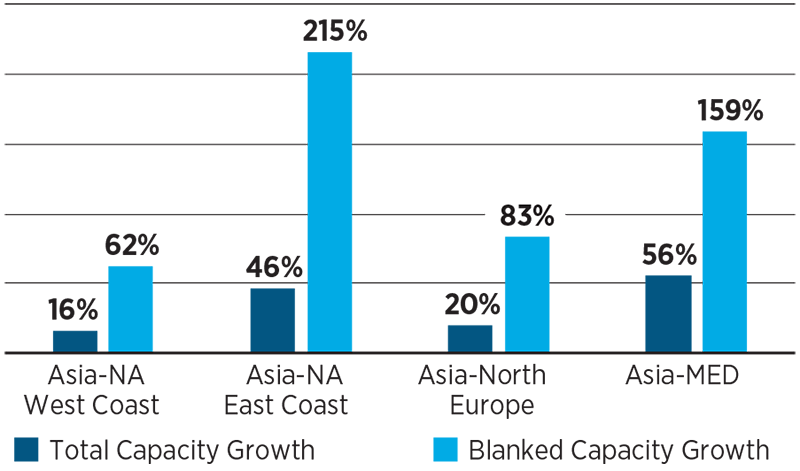
Geopolitical disruption is absorbing a significant portion of the fleet. Security risks around the Red Sea and Strait of Hormuz have lengthened routes, raised fuel and insurance costs, and contributed to port congestion. Longer voyages mean vessels complete fewer trips, while delayed ships and containers often accumulate in the wrong ports. However, carriers are also relying more heavily on blank sailings—canceling scheduled voyages or port calls—to manage capacity. Compared with the first half of 2019, scheduled capacity on the Asia-U.S. East Coast route grew 46% in the first half of 2026, but blank capacity jumped 215%. Across major routes, an estimated 10% to 14% of capacity is being withdrawn. Canceled cargo rolls onto subsequent voyages, leaving multiple weeks of shipments competing for one week’s space. The result is delayed cargo, unreliable schedules and upward pressure on rates, even when underlying demand is not booming.
This strategy is especially consequential in a highly concentrated industry. The 10 largest container companies control about 85% of global capacity. Most also participate in vessel-sharing alliances, magnifying the effect of service changes across trade lanes. Meanwhile, the U.S. is vulnerable because not one of the 10 largest container carriers is U.S.-owned. The world’s largest importing economy therefore depends overwhelmingly on foreign companies to move its international containerized trade.
Shipping has become expensive again because geopolitical disruptions are consuming capacity while a small group of dominant carriers increasingly use blank sailings to determine how much of its expanded fleet actually reaches the market. More ships on paper do not guarantee more space for American businesses.
economy
September 8, 2026
Why More Ships Have Not Made Shipping Cheaper
Blanked Capacity Growth Outpacing
Total Capacity Growth (1H 2019 vs. 2026)
SOURCE: Sea Intelligence.