- Main
-
The artificial intelligence (AI) boom is running into a constraint that enthusiasm cannot erase: the cost of money. The resulting strains reveal a broader economic problem. We are trying to build tomorrow’s infrastructure in an economy where today’s costs are already rising.
Annual inflation accelerated to 3.7% in September. Energy drove much of the increase, but the investment boom adds another source of pressure. Data centers and supporting infrastructure compete for electricity, equipment, skilled workers and financing. Where supply cannot respond quickly, stronger demand can mean higher prices.
Those pressures can reinforce one another. Persistent inflation keeps upward pressure on interest rates. Higher borrowing costs make infrastructure more expensive. Delays in construction or power connections postpone revenue while interest expenses accumulate. Projects then need more funding before they generate a dollar of operating income.
Recent reporting shows where that tension is surfacing. The Wall Street Journal describes a widening divide between technology giants with ample cash and smaller AI providers dependent on borrowing. The Financial Times reports falling bond prices across data-center projects, including facilities with major technology tenants. A recognizable customer does not eliminate construction delays, financing problems or uncertainty about future revenues.
The imbalance could be substantial. Gartner estimates that data-center owners would need $8.5 trillion in revenue by the end of 2030 to cover capital and financing costs and earn healthy returns, compared with projected spending flowing to providers of no more than $3.6 trillion. Forecasts are uncertain, but the financing challenge deserves attention.
Higher rates should eventually restrain investment and ease demand pressures. Yet that adjustment is uneven. Wealthy technology companies can keep building while weaker borrowers struggle, prolonging competition for scarce resources even as financial stress grows. This creates a difficult planning environment. Meeting prospective demand requires investment, but anticipated load is only as dependable as the financing and commitments behind it.
AI may deliver substantial productivity gains. Reaching that future, however, requires projects that survive the present. The economy we are creating will depend on whether expected returns can justify construction costs, borrowing costs and risks that are all rising together.
economy
October 19, 2026
The AI Boom Meets the Cost of Money
The Cost of Borrowing Tomorrow
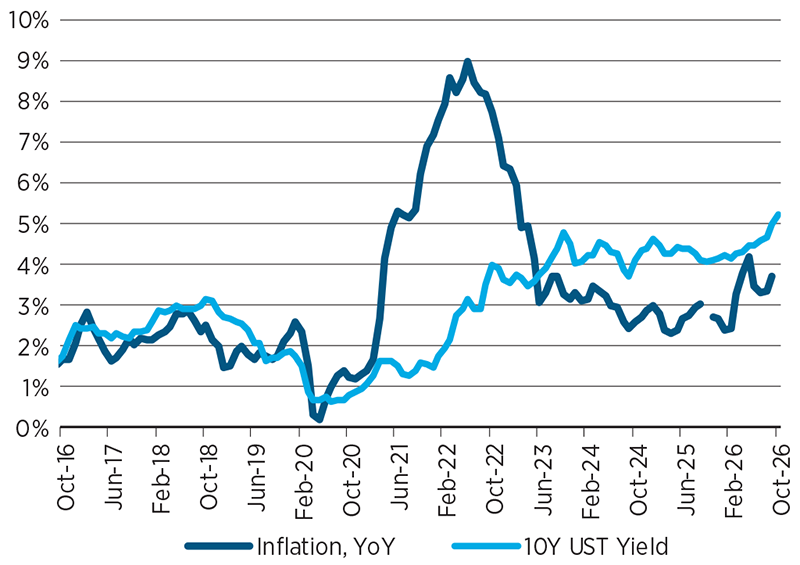
SOURCE: Federal Reserve Bank of St. Louis.