- Main
-
Take a seat—we need to talk about the self-inflicted $1 trillion problem: the annual cost of voluntary turnover for U.S. businesses. Unlike a recession, a natural disaster or a supply chain disruption, much of this loss is self-inflicted. Gallup estimates that 42% of voluntary employee departures could have been prevented, suggesting that many organizations are paying an enormous price, not because employees are impossible to retain, but because they failed to invest in keeping them. If even a fraction of that $1 trillion is avoidable, then employee retention is one of the largest unrealized investment opportunities in the economy.
Electric cooperatives understand better than most organizations that replacing employees is neither quick nor inexpensive. Rural service territories limit the available labor pool, making recruitment inherently difficult. At the same time, many cooperative positions—from line workers and substation technicians to system operators—require years of training, certification and hands-on experience. These occupations are already facing nationwide labor shortages.
Yet when budgets tighten, retention initiatives may be among the first expenses questioned. On paper, reducing these investments may produce short-term savings. In reality, they often create much larger costs down the road. Replacing an experienced employee is far more expensive than simply posting a job opening. Recruitment costs are only the beginning. Vacancies frequently require overtime, increased reliance on contractors, delayed maintenance and months of reduced productivity while new employees learn the system. More importantly, every departure takes with them institutional knowledge that cannot be replaced overnight—the understanding of local infrastructure, restoration practices, safety procedures and relationships built over years of serving the community.
For electric cooperatives, the economics is clear. Retention should not be viewed as a cost to minimize but as an investment that protects one of the cooperative’s most valuable assets: its people. Every experienced employee retained preserves years of accumulated human capital, reduces operational risk, strengthens reliability and allows leadership to focus on serving members instead of constantly rebuilding the workforce.
In the end, the cheapest decision on this year’s budget may prove to be the most expensive decision over the next decade. The true cost of retention is visible on an income statement. The cost of failing to retain great employees is measured in the loss of productivity, knowledge and opportunity.
economy
July 27, 2026
Employee Retention Pays Dividends for Electric Cooperatives

Over Half of Employees Are Open to Leaving Their Job
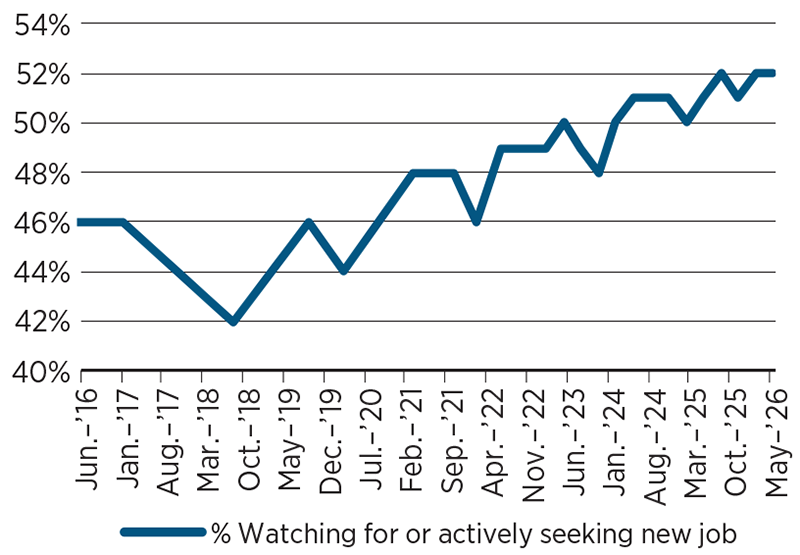
SOURCE: Gallup.