Reliability risks are increasingly shaped by structural challenges as demand growth outpaces additions to generation and power supply. The Midcontinent Independent System Operator (MISO) and PJM Interconnection (PJM) markets are experiencing surging peak demand alongside substantial generation retirements, resulting in tighter reserve margins. For example, MISO’s summer peak demand is projected to grow from 127 GW in 2026 to 143 GW by 2035, according to the North American Electric Reliability Corp.’s (NERC) “Long-Term Reliability Assessment.”
Utilities such as Hoosier Energy, a generation and transmission cooperative, are navigating a reliability landscape defined by accelerating load growth, evolving market dynamics and growing complexity across generation and transmission systems. Serving 17 member distribution cooperatives in Indiana and Illinois, Hoosier has restructured its power supply portfolio and grid planning practices to reduce risk, increase flexibility and prepare for a more uncertain future.
In 2023, Hoosier’s Board of Directors approved a new growth strategy statement in response to the sharp increase in potential mega load projects. The G&T cooperative is seeing load growth along two distinct paths, each with different planning and reliability implications. Traditional native load tied to member growth, including manufacturing, logistics and other economic development projects under 50 MW, continues to rise steadily. At the same time, the cooperative is experiencing a sharp increase in interest from much larger loads, particularly data centers and other facilities exceeding 50 MW. While native load growth has been incremental, large-load interest has accelerated significantly, with requests arriving at a pace that would have been rare just a few years ago.
A Portfolio Built for Diversity, Adaptability
At the center of Hoosier’s strategy is a shift away from reliance on large, concentrated assets toward a more diversified and flexible resource mix. Several years ago, Hoosier launched an integrated resource planning process grounded in four pillars: reliability, affordability and rate stability, diversity and sustainability. These criteria continue to guide decisions today.
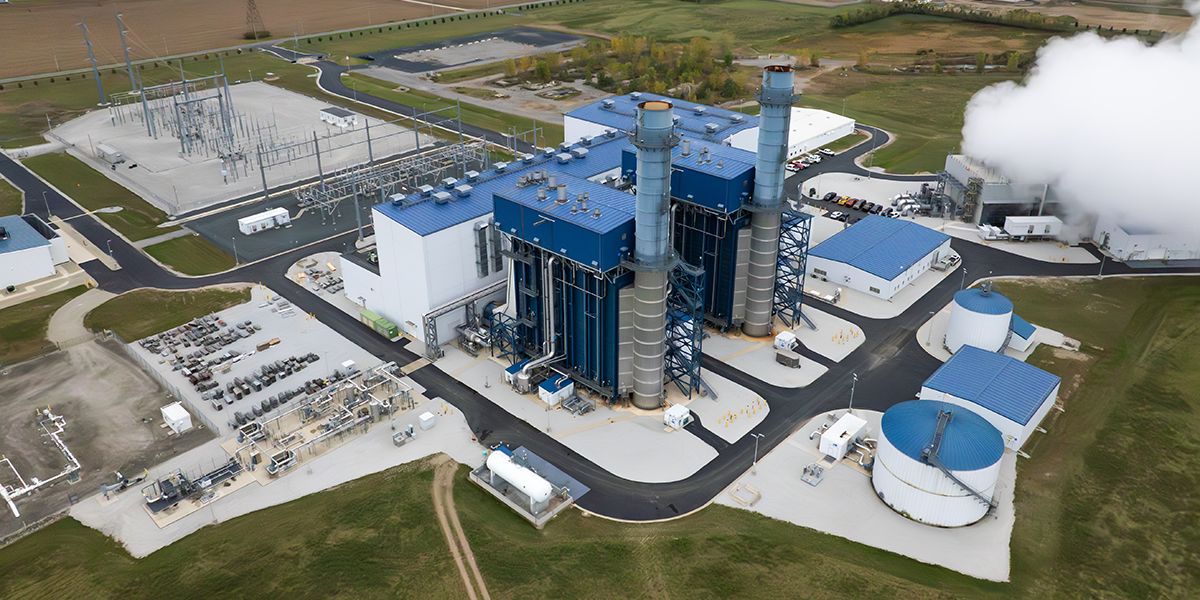
Applying this framework, Hoosier reduced exposure to single, dominant resources, including transitioning ownership of the Merom Generation facility and capping individual resource sizes at roughly 300 MW to limit concentration risk. About a year ago, Hoosier and Wabash Valley Power Alliance each acquired a 50% stake in a 720 MW natural gas plant. In 2023, Hoosier Energy—with Wolverine Power Cooperative—signed a power purchase agreement with Holtec International as power off takers once the Palisades Nuclear Power Plant in Michigan is restarted.
Over the past five years, Hoosier has rebalanced its portfolio to rely less on any single resource. The cooperative shifted from a fleet that was once roughly 80% owned generation to a more balanced mix of owned and contracted resources. Today, the portfolio is close to evenly split, with a long-term focus on maintaining flexibility as markets and member needs evolve.
Contracted resources are structured with staggered terms, often five to eight years rather than multi-decade commitments. This approach enables Hoosier to adjust positions as capacity markets tighten or loosen without locking members into unnecessary risk.
Managing Fuel, Market Volatility
Hoosier’s gas-fired fleet plays an important role in reliability, but managing fuel supply and price volatility requires a layered strategy. The cooperative evaluates each plant individually, tailoring supply arrangements based on pipeline constraints, capacity factors and operational roles. These arrangements include a mix of firm transportation, marketer contracts and partnerships designed to improve deliverability during stress conditions.
“We don’t treat gas supply as one-size-fits-all,” said Will Kaufman, Hoosier vice president of power supply & risk management. “Each plant has unique characteristics, and our approach reflects that.”
In addition to physical strategies, Hoosier maintains a financial hedging program tied to expected plant dispatch and native load over a multi-year horizon, providing additional protection against volatility.
Transmission Investment as Reliability Hedge
On the transmission side, Hoosier is pursuing both system reinforcement and cost-risk mitigation. Within MISO, the cooperative participates in long-range transmission projects through partial ownership stakes, helping strengthen regional reliability while managing cost exposure.
“We’re going to pay for those projects either way,” said Justin Swarens, Hoosier vice president of technical services. “By having ownership, we can help control costs and earn a return for our members.”
“We’re going to pay for those projects either way. By having ownership, we can help control costs and earn a return for our members.”

Closer to its system, Hoosier has increased investment in aging infrastructure, maintenance programs and planning for large-load interconnections. The cooperative emphasizes upfront engineering studies and feasibility assessments and allocates applicable costs to developers to help protect existing members from undue risk.
One of Hoosier’s most significant reliability initiatives is the deployment of remotely controlled switches across its transmission system. Operating a largely radial network with loop capability, these SCADA-enabled devices allow operators to quickly reconfigure the system during outages.
Preparing for What’s Next
Hoosier’s experience underscores the need for continuous reassessment and disciplined planning. Strategies that worked a few years ago may not fit today’s fast-changing environment. Cooperatives should be willing to revisit assumptions and adapt as market conditions, load profiles and risks evolve.
From a transmission and operational perspective, strong upfront processes are essential, particularly for large-load inquiries. Cooperatives could also invest early in feasibility and system impact studies, establish clear cost-allocation frameworks and fully understand where risks and costs originate before committing capital.
Hoosier’s leadership emphasized flexibility, rigorous due diligence and a willingness to evolve as critical to maintaining reliability without placing undue burden on existing members.
Looking ahead, the cooperative expects large, concentrated loads, particularly data centers, to represent a growing share of demand. Preparing for that shift will require deeper coordination on curtailment strategies, protection studies and operational planning to manage sudden load changes while maintaining grid stability.
Reliability today depends on diversity, flexibility and disciplined risk management, along with a willingness to continuously reassess assumptions as the grid evolves.
“Status quo isn’t an option anymore,” Kaufman said. “The industry is changing too quickly for that.”
“Status quo isn’t an option anymore. The industry is changing too quickly for that.”