- Main
-
Several regional power markets in the U.S. have established capacity market frameworks to support reliability and ensure adequate electric supply. Unlike energy markets, which compensate generators for electricity produced, capacity markets compensate resources for being available when needed. These markets are intended to ensure that enough generating capacity is available to meet future demand while helping determine a market-clearing price for reliability services.
Regional capacity markets have come under increasing pressure as electricity demand grows faster than the infrastructure required to serve it. As a result, many regions are experiencing higher capacity costs, which are often passed through to retail consumers in electric rates.
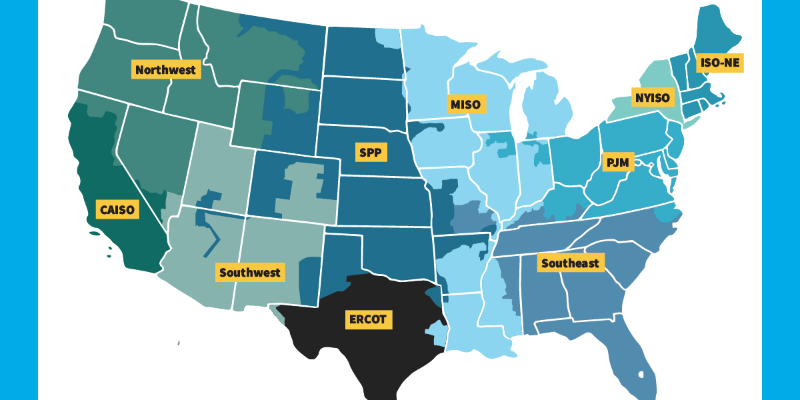
Four organized power markets currently operate capacity market constructs: PJM Interconnection, Midcontinent Independent System Operator (MISO), ISO New England and New York ISO. While capacity market designs vary by region—including demand curves, seasonality, auction timing and participation rules—auction clearing prices can provide valuable insight into emerging reliability risks and supply-demand conditions.
Regional Market Trends
PJM Interconnection: Capacity prices and reliability concerns remain elevated in the nation’s largest power market. PJM’s most recent capacity auction for the 2028–29 delivery year reached the Federal Energy Regulatory Commission-approved price cap of $325/MW-day as concerns over potential supply shortages persist. The auction left PJM approximately 6.8 GW below its target reserve margin, marking the second consecutive auction in which the region failed to meet its supply target.
MISO: Capacity prices declined significantly following a strong year of supply additions. Capacity offered in MISO’s most recent summer auction for the 2026–27 planning year increased 3.4% to 141 GW. The resulting surplus helped reduce annualized prices to $116–$126/MW-day, down from $212–$217/MW-day a year earlier. While this correction is encouraging, conditions can change quickly. Capacity prices remain roughly 500% higher on average than they were two years ago.
New York ISO: Supply conditions have tightened considerably, driving capacity prices to record highs. Although New York ISO met its supply target in the most recent auction, it did so with a margin of just 0.09%. Historically, the market has exceeded its minimum supply target by ~10% during both summer and winter periods. That cushion has largely disappeared, helping push prices above $32/kW-month in the New York City zone, nearly triple the average level seen in 2024–25.
ISO New England: To ease capacity market pressures, ISO New England is considering significant reforms to its capacity market design. The proposal would replace the current three-year-forward auction with a prompt month-ahead auction. Supporters believe the change could improve forecasting accuracy and allow price signals to more closely reflect actual reliability needs, reducing reliance on long-term projections as demand continues to grow.
As reserve margins continue to tighten across the country, capacity markets will remain a central focus for utilities, grid operators and regulators seeking to balance reliability needs with affordability. Electric cooperatives with exposure to capacity markets should continue monitoring market developments as demand growth tests the ability of these systems to maintain reliability at a reasonable cost.
energy-tech
August 25, 2026
Higher Capacity Costs Test Reliability, Affordability